Traveling GTSI cohorts for 2026
The Glenn T. Seaborg Institute at ORNL will host the first group of postdoctoral fellows in a new interlaboratory traveling program.
Fellows in the cohort will get to visit each of the five Seaborg Institutes, starting with ORNL April 22-23. Trips to institutes at Lawrence Livermore, Los Alamos, Lawrence Berkeley and Idaho national labs will follow, in what organizers plan to make an annual program.
“The Seaborg Institutes are excited to bring together postdocs from across the complex to help build a community of early career scientists under the umbrella of the Seaborg Institutes,” said Mavrik Zavarin, director of LLNL’s Glenn T. Seaborg Institute.
Each of the national labs will send up to three fellows.
“We’re very excited about this program,” said Sam Schrell, director of the Glenn T. Seaborg Institute at ORNL. “Collaborating with other Seaborg Institutes and encouraging early-career scientists in the field of actinide science is crucial to both our missions and their long-term career success. We look forward to hosting these exceptional fellows here at ORNL!”
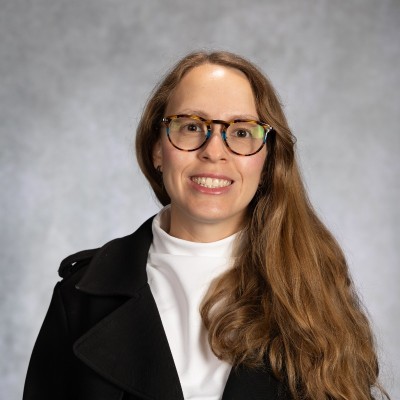
Stephanie Castro Baldivieso, Idaho National Laboratory
Baldivieso’s research focuses on electrochemistry in molten salts, thermodynamic properties of liquid metal alloys in molten salts, clay-based materials for immobilization of molten salt waste, separation of fission products from molten salts, and aluminum decladding from fuel. She holds a bachelor’s degree in chemistry from Florida International University and a doctoral degree in materials science and engineering from Pennsylvania State University. Baldivieso hopes to pursue a career in the national lab system, eventually becoming a professor. Baldivieso enjoys fly-fishing. She volunteers with the nonprofit Mayfly Project, teaching fly-fishing to children in the foster-care system. She’s excited to visit Oak Ridge, having followed the lab’s work in molten salt and spectroscopy, and hopes to develop relationships with other scientists for future collaborations.
Eva Baransky, Lawrence Livermore National Laboratory
Baransky uses her expertise in metal isotope geochemistry to develop nuclear forensic signatures. She also supports research on improved actinide purification procedures. Baransky holds a bachelor’s degree in biochemistry from Barnard College and a doctorate in earth science and environmental sustainability from Northern Arizona University. She hopes to continue research in the national lab system, supporting national security missions. Baransky enjoys knitting and hiking (“not necessarily at the same time”). She is excited to connect with other postdocs interested in actinide science and learn about work happening at other national labs.
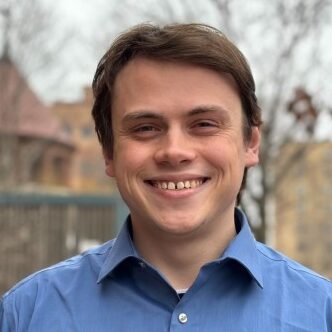
Alexander Brown, Lawrence Berkeley National Laboratory
Brown’s research revolves around using EPR and luminescence measurements to quantify differences in the crystal field splitting of isoelectronic lanthanides and actinides. Additionally, he is working to build a molecular understanding for the trivalent An/Ln selectivity of high denticity picolinic acids. He holds a bachelor’s degree in biochemistry from Bridgewater State University and a doctoral degree in inorganic chemistry from Brown University, where he studied under Jerome Robinson. He hopes to work as a staff scientist or profession centered on heavy element chemistry and spectroscopy. Brown enjoys exploring new restaurants, museums and bookstores. He is excited to meet scientists and visit facilities where the transuranic elements LBML receives are separated and isolated. He hopes to build connections with ORNL scientists and gather insight on modern nuclear separations workflows.
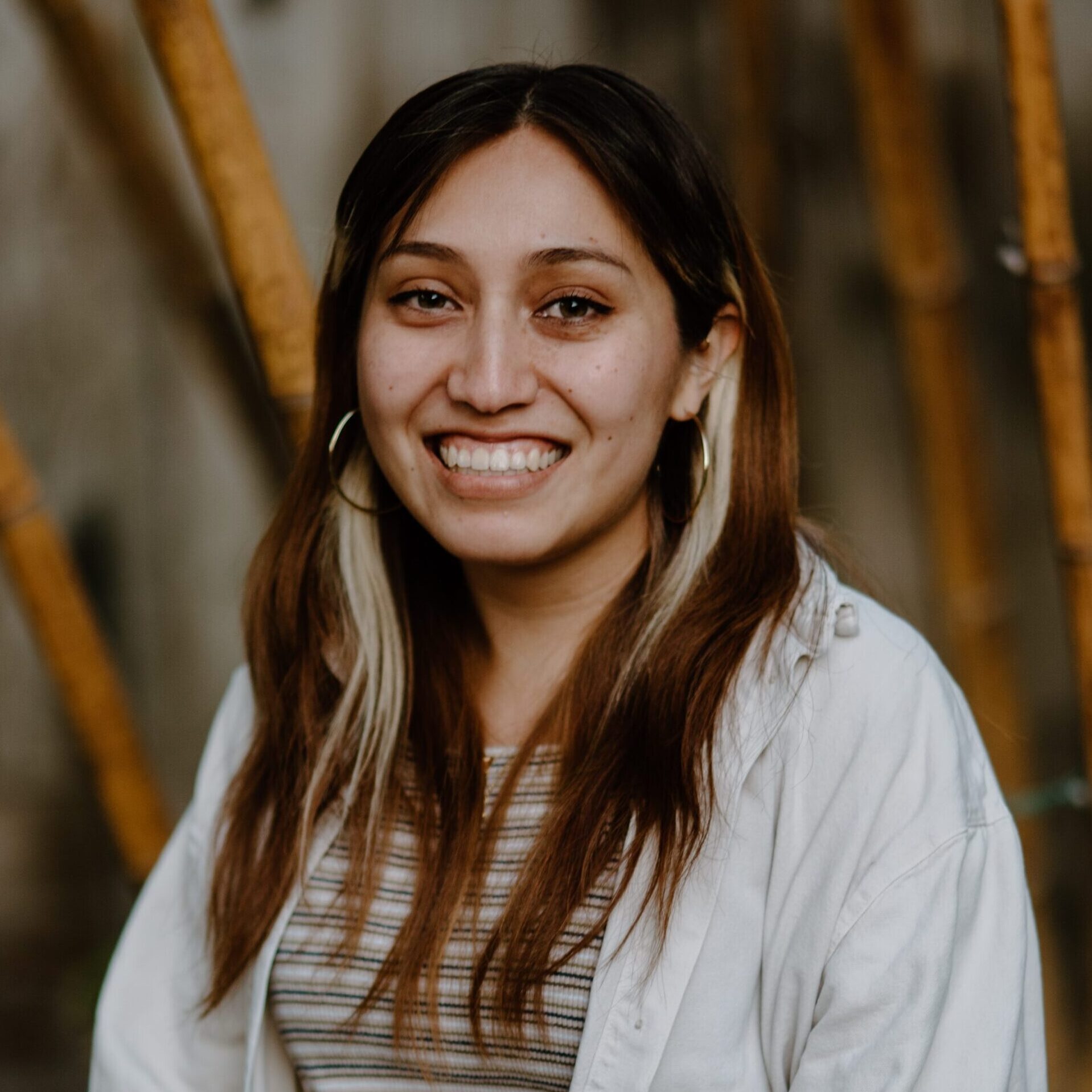
Leslie G. Castro, Lawrence Berkeley National Laboratory
Castro’s research centers on investigating the speciation of actinyl hydroxides in alkaline environments. She focuses on synthesizing species that may be found in solution and characterizing the metal complex structures with SCXRD, Raman, EXAFS and their emission. Castro holds a bachelor’s degree from Columbia University and is a doctoral candidate at the University of California-Berkeley. She plans a career working on energy and sustainability, using her synthetic chemistry background to continue with research, and hopes to mentor newer students and future researchers. Castro enjoys dancing, Mexican Folkorico and boulder, and likes to try new or different pastry shops. She is excited about visiting ORNL’s research facilities and meeting researchers from other national labs. She hopes to learn about their day-to-day work and projects, what questions they’re focusing on, and what instruments they work with.
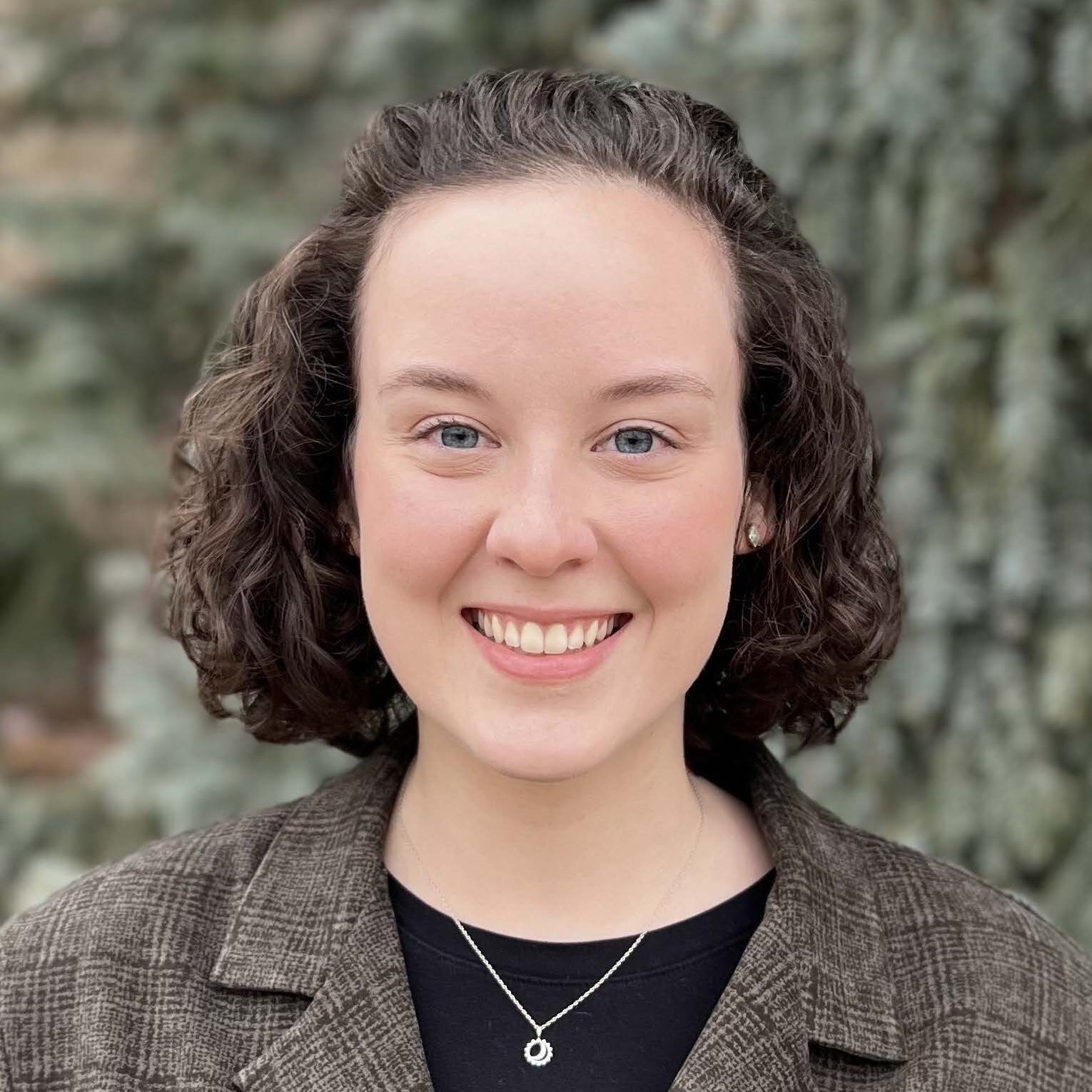
Carmen Chamberlain, Oak Ridge National Laboratory
Chamberlain’s current projects encompass uranium and fission product fluoride chemistry to advance off-gas separations relevant to used nuclear fuel processing and recycling. Her work at the GTSI centers on the fluorination of technetium-99 and its subsequent reactivity as technetium hexafluoride with uranium hexafluoride, chemical trapping media, and stainless steel. In another project, she investigates separations of several fission product fluorides using a novel trapping medium. She also produces and analyzes uranium fluorides using various methods to expand the nuclear forensic signatures library. Chamberlain holds a bachelor’s degree in chemistry from Hope College and a doctorate in chemistry from the University of Notre Dame. Long-term, she hopes to become a nuclear nonproliferation analyst with a national lab or government agency, after several years as a staff scientist at a national lab, broadening her knowledge of the nuclear cycle. Chamberlain enjoys fiber arts such as knitting, crochet and cross-stitch, along with cooking and playing games. She’s excited to share what ORNL has to offer with visiting fellows, “like a large-scale show-and-tell,” and establish working relationships with them to facilitate collaborations.
Christine F. Chan, Lawrence Livermore National Laboratory
Chan’s research focuses on developing novel techniques for radiochronometry and broader nuclear forensics applications. She integrates micro-analytical methods (e.g., EPMA, FIB-SEM/SEM, SIMS) with high-precision MC-ICP-MS isotope ratio measurements to characterize micro-scale heterogeneity and determine production ages of impure uranium materials. Chan holds a bachelor’s degree in geology from the University of Puget Sound, a master’s degree in geology from Oregon State University and a doctoral degree in geology from the University of Kansas. She hopes to gain a staff scientist position at LLNL. Chan enjoys running, archery, hiking/backpacking, gardening and playing board games. She is excited to meet and network with other early-career Seaborg Institute scientists and to learn about other labs’ actinide research. She hopes to brainstorm future interlaboratory research collaborations.
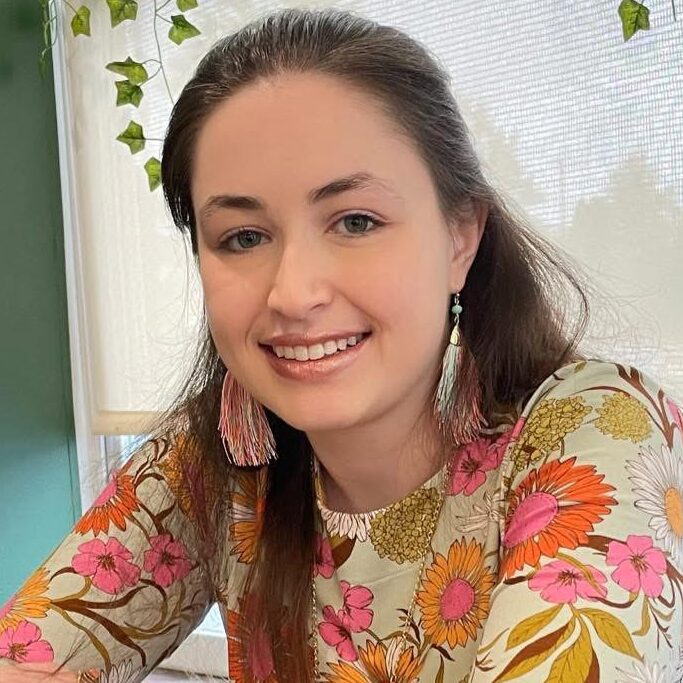
Kaitlyn Engle, Oak Ridge National Laboratory
Engle’s research involves the synthesis, characterization, and redox profiling of a series of Pa, Np, and Pu compounds using robust chelating ligands, towards improving redox control and separations for these key elements in the Pu-238 supply chain. Engle holds a bachelor’s degree in chemistry from Columbia University and a doctorate in inorganic chemistry from Georgia Institute of Technology. She hopes for a research staff position at a national lab. Engle enjoys baking, painting and hiking. She looks forward to connecting with a community of actinide scientists and learn more about the capabilities of different facilities as well as the scope of work in areas of actinide research.
Sara Gilson, Oak Ridge National Laboratory
Gilson’s research involves Np and Pu coordination chemistry and actinide absorbance spectroscopy, and she hopes to study actinide crystallography as well. Gilson holds a bachelor’s degree from Loyola University and a doctorate from the University of Notre Dame, and she engaged in post-doc studies at Helmholtz-Zentrum Dresden-Rossendorf. She plans to pursue a career in actinide chemistry with mentoring students involved but is open to opportunities. Gilson enjoys cooking, fishing, yoga, reading, learning German and running, and she is training for a half-marathon. She is excited to make connections with fellows from other labs and hear about their experiences and science, as well as to tour facilities at ORNL.
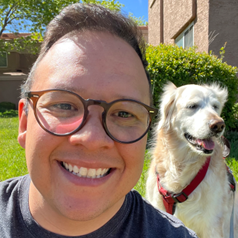
Adrian Gonzales, Lawrence Livermore National Laboratory
Gonzales is working on a project investigating carbon contamination in U-Nb-Mo-Ti systems. His team has examined UC with Nb additions and discovered phase and microstructural changes occurring. THey are currently examining diffusion couple experiments with NbTi + C, UNb alloys + C, and U + Nb. He holds a physics doctorate from the University of Texas at San Antonio and plans for a career in the nuclear section, either at a national lab or in industry. Gonzales recently discovered an affinity for murder-mystery books. He is excited to see ORNL's capabilites and to gain new and lasting connections with other postdocs.
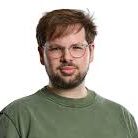
Connor K. Holiski, Lawrence Livermore National Laboratory
Holsiki is developing purification and separation techniques to support 73As(n,2n) cross-section measurements at the National Ignition Facility. He’s also developing actinide purification and separation methods for programmatic work using extraction chromatography and metal-free reductants. Holiski holds a bachelor’s degree in chemistry from the University of Denver and a doctorate in nuclear engineering from the University of Utah. He hopes for staff scientist position focused on supporting programmatic mission needs and also plans to actively pursue Office of Science funding to enable non-programmatic R&D, particularly in medical isotope production and separation challenges. Holiski enjoys blending science and creativity in unique ways through designing, sewing, soldering and other crafts. He likes food adventures, thrifting for uranium glass and ornate treasures, and finding new music.
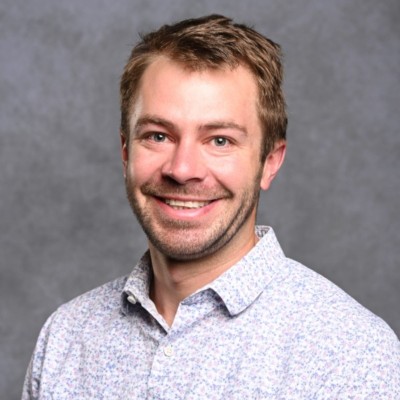
Steven Rehbein, Idaho National Laboratory
Rehbein’s postdoc work is focused on novel extractants with unique photophysical behavior. He’s also involved with work on plutonium redox chemistry, functionalized and solvent impregnated resins, and crystalline organic scintillators. Rehbein holds a bachelor’s degree in chemistry and a doctorate in inorganic chemistry, both from Montana State University. He hopes to join INL full-time in the fall and build his own instrumental capabilities to continue pursuing novel photochemical extractants, ensuring the right instruments are available to conduct such research. Rehbein is an avid outdoors enthusiast and may extend his East Tennessee trip to include caving with friends. He’s excited to see ORNL’s unique facilities and establish new professional relationships that may allow for future collaboration. He is particularly interested in work with novel extractants for hydrometallurgical separations.

Benjamin Walusiak, Los Alamos National Laboratory
Walusiak’s research topics include X-ray absorption studies of actinides accounting for age and processing conditions; total electron yield studies for surface characterization of actinides; multi-component uranium carbides for nuclear thermal propulsion; and characterization of uranium chloride salts from room temperature to melting. He holds a bachelor’s degree in materials science and engineering from the University of Illinois at Urbana-Champaign, a master’s degree in chemistry from Eastern Illinois University; and a doctorate in chemistry from George Washington University. He hopes for work as a staff scientist at a national lab or user facility, relating to chemistry/materials science and/or X-ray scattering science. Walusiak enjoys finding creative solutions to work-related problems. He hopes to network and learn more about opportunities in the DOE complex as well as connecting with mentors. He’s excited to ask SNS instrument scientists about data workup from last year.